


Vertical Harvest Farms
USDA Construction-to-Permanent Financing | Controlled Environment Agriculture (CEA)
In Brief
Discover how Waterside Commercial Finance helped deliver one of the largest USDA B&I and REAP construction financings completed to date—supporting a multi-story vertical farm in Westbrook, Maine. This landmark project combined multiple USDA programs with C-PACE and state-level funding, setting a precedent for how blended government-backed capital can advance sustainable agriculture finance.
Capital Stack
Waterside led the USDA financing component of a larger capital structure that blended multiple sources of federal, state, and private capital into a unified construction-to-permanent facility. This included delivering the USDA B&I and REAP combination loans that anchored the project's long-term debt and enabled alignment with complementary C-PACE and state funding.
Execution Outcome
The result was one of the most significant USDA B&I and REAP combination construction loans completed under the programs. Waterside identified a pathway to eligibility (including NEPA), coordinated program approvals, and facilitated a multi-layered capital stack across USDA B&I, REAP, C-PACE, and state funding to close the construction-to-permanent facility. This project reinforces Waterside's expertise in complex USDA program eligibility, CEA project finance, and multi-program capital execution.
$25MM USDA REAP Loan
Long-term, fixed-rate financing that provided stability and predictable debt service.
$23.8MM USDA REAP Loan
Financing for energy-efficient agricultural equipment, paired with the B&I loan as part of the overall construction-to-permanent financing.
$8.6MM C-PACE Loan
Commercial Property Assessed Clean Energy (C-PACE) loan — first of its kind in Maine.
Direct Capital Participation
Waterside provided direct capital to complete the stack.

Overview
Waterside Commercial Finance has successfully facilitated $49 million in USDA-guaranteed debt as part of a $90 million construction-to-permanent financing facility for a multi-story vertical farm in Westbrook, Maine. The transaction marks one of the most significant government-backed financings in the controlled-environment agriculture (CEA) sector to date and underscores Waterside's ability to structure complex, layered capital stacks for high-impact rural projects.
The Project
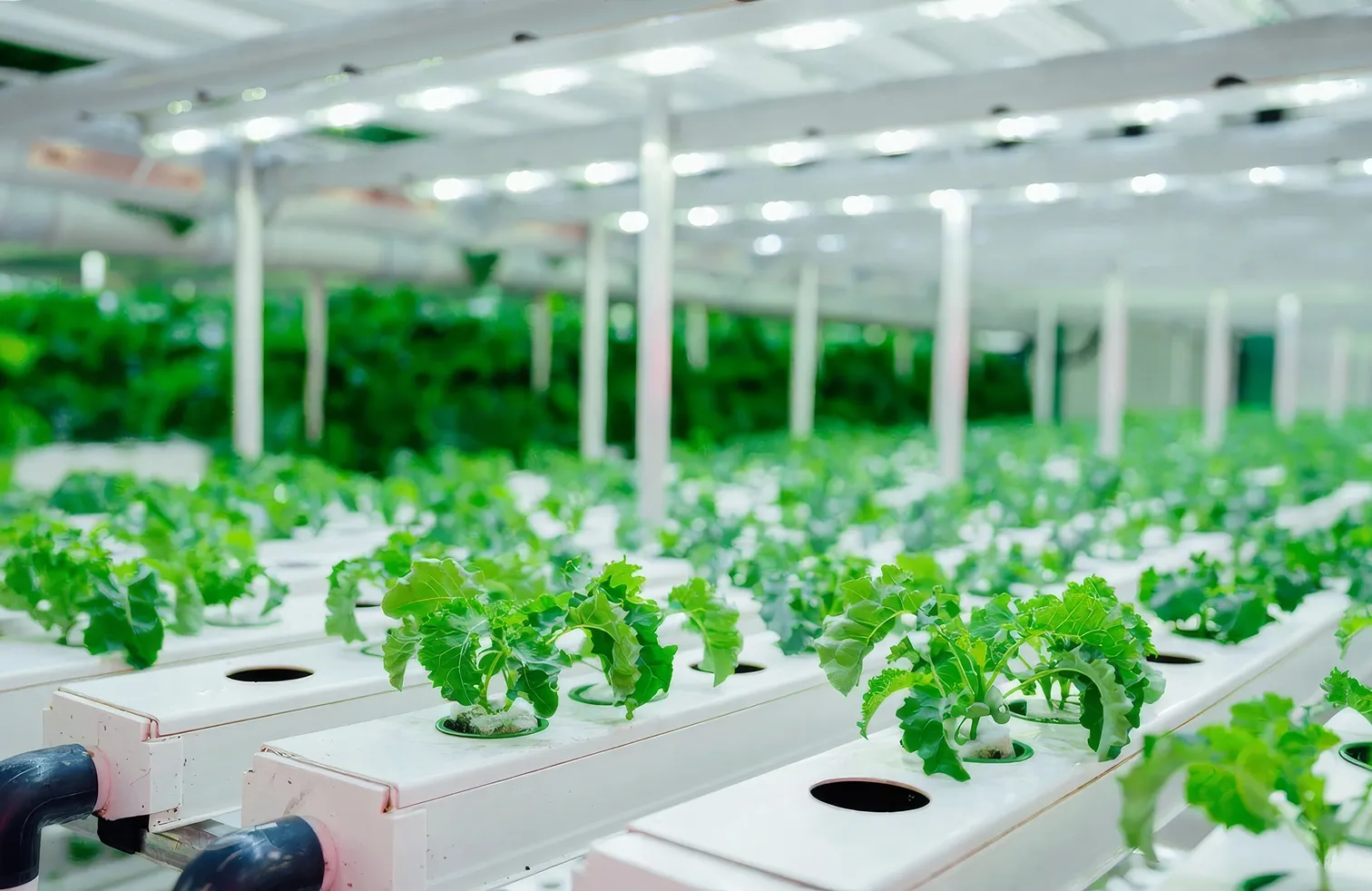
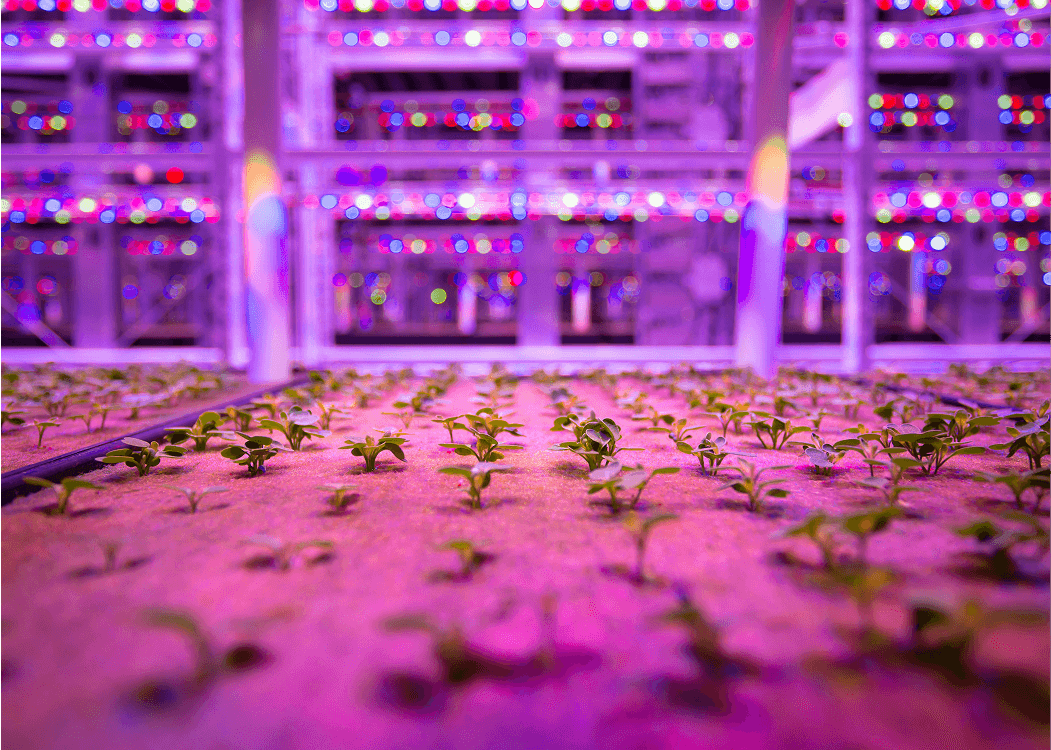
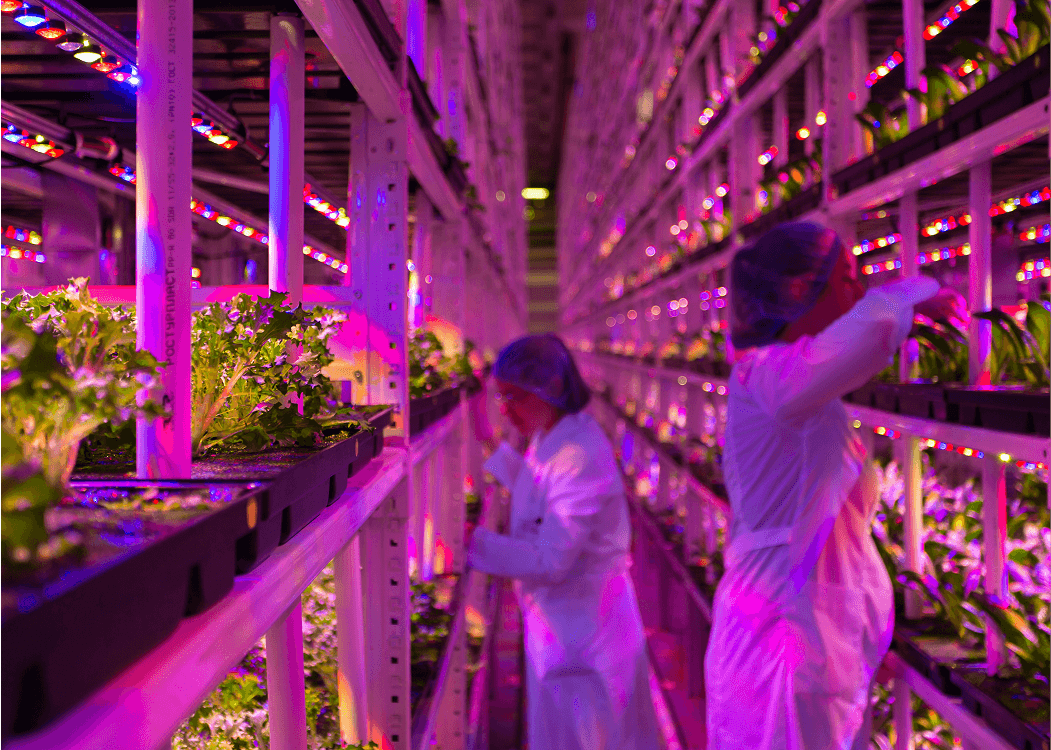
Vertical Harvest Farms operates an innovative multi-story growing facility engineered to produce leafy greens, herbs, and specialty crops at commercial scale in a fraction of the land footprint required by conventional agriculture. The Westbrook facility — a purpose-built, climate-controlled environment — is designed to serve regional grocery chains, institutional buyers, and food service distributors across New England, bringing locally grown produce year-round to a market long dependent on out-of-state supply chains.
The Financing Structure
The $90 million capitalization was built from the ground up using a combination of USDA Business & Industry (B&I) guaranteed loans and USDA Rural Energy for America Program (REAP) financing, aligned alongside C-PACE (Commercial Property Assessed Clean Energy) funding and state-level economic development grants. Waterside navigated complex program eligibility rules across multiple federal and state agencies, coordinating lender relationships and sequencing capital commitments to reach a simultaneous close.
The $49 million USDA-guaranteed tranche provides long-term, fixed-rate debt that anchors the project's permanent financing stack — reducing the cost of capital materially compared to conventional alternatives and enabling the sponsor to deploy equity into operational build-out rather than debt service reserves.
What This Deal Demonstrates
The Vertical Harvest transaction illustrates how disciplined program fluency and creative capital structuring can make high-impact controlled-environment agriculture financially feasible. Projects in this sector frequently struggle to attract institutional debt because lenders lack familiarity with CEA cash flows, collateral profiles, and operating assumptions. Waterside's deep knowledge of USDA program mechanics — and its ability to align multiple funding sources without disrupting project timelines — allowed this deal to move from term sheet to close with certainty.
For sponsors and developers working in CEA, food systems, or rural manufacturing, this transaction is a proof point: government-backed capital is available for sophisticated, well-structured projects. The key is having a capital partner with the expertise to access it.

Next Case Study